Oddball Observations of the 2026 CSTA Conference
Heading into this year’s CSTA Conference as a retired teacher and CSTA Washington’s VP of Communications, rather than focusing on specific lesson plans or classroom tools, I wanted to wander, observe, and report on aspects of the conference that wouldn’t be mentioned elsewhere on this site. What emerged was the following collection of quirky insights from across the event—and I couldn’t wait to bring those observations back to share with all of you.
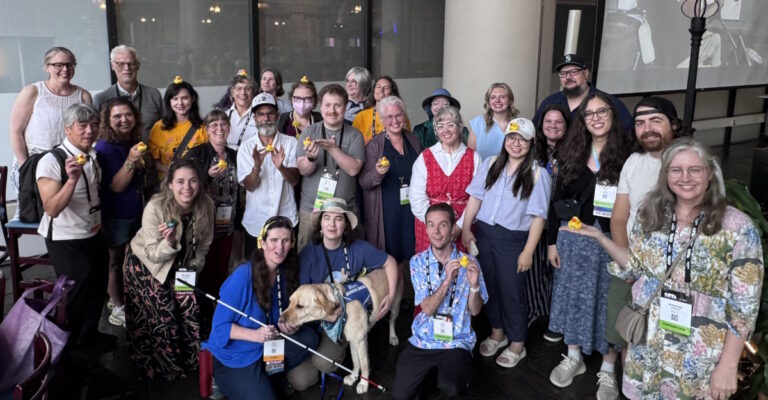
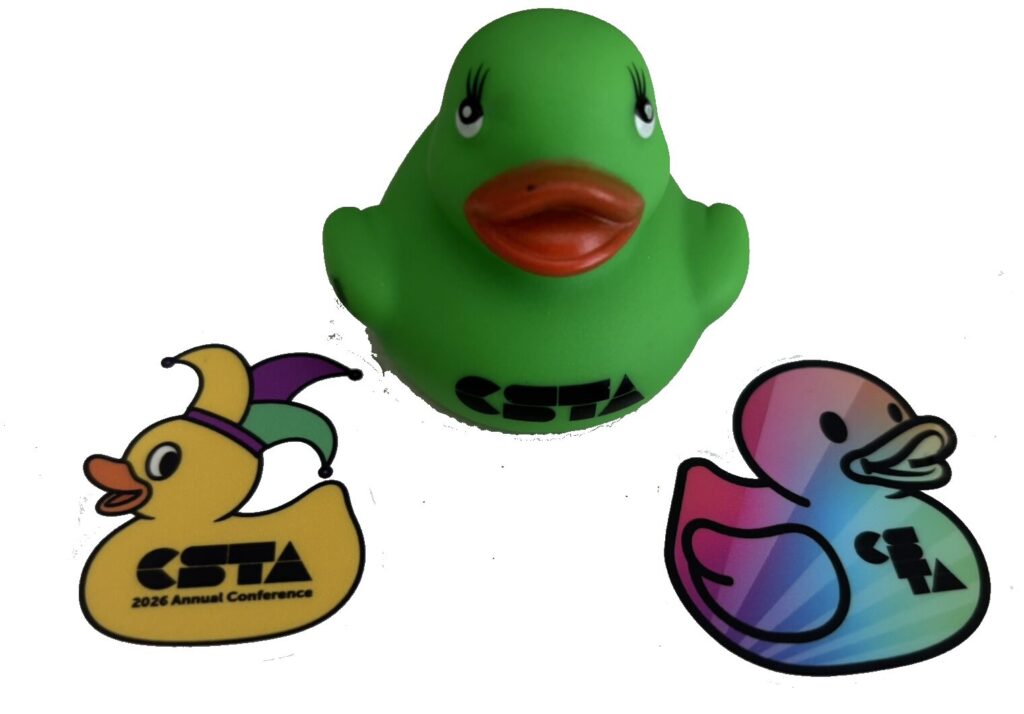
- CSTA National Adopts the Duck. Some of the popular SWAG distributed by CSTA national – a green rubber duck and two stickers – look oddly like something CSTA Washington would create, but without the “Washington”.
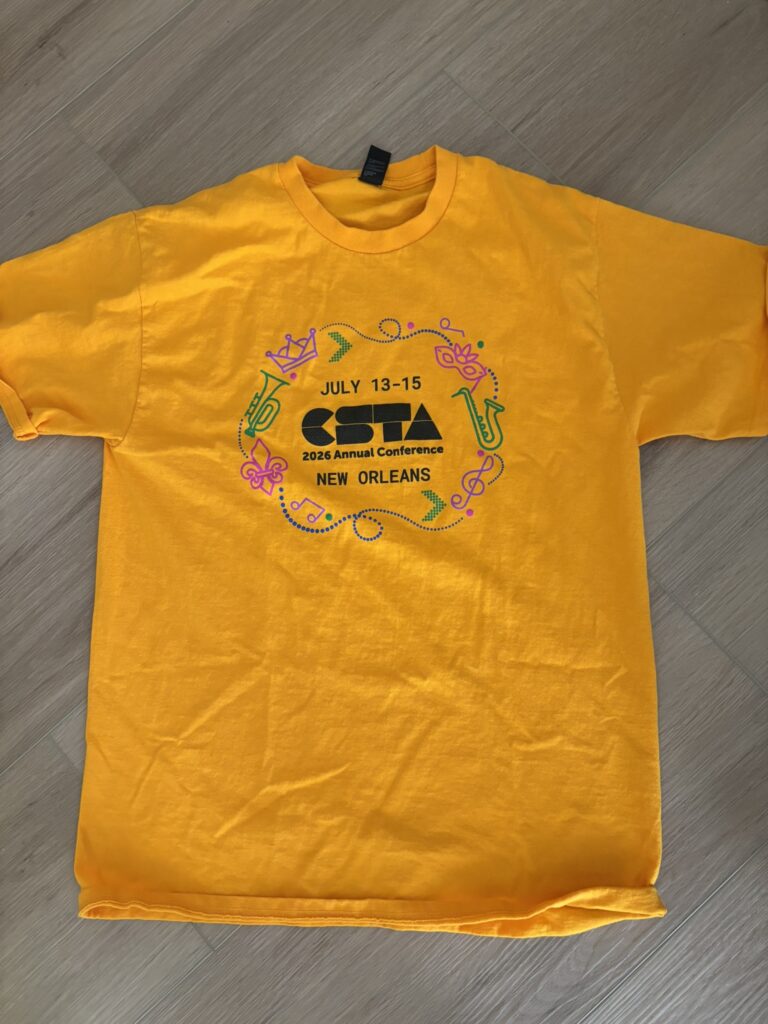
- I liked the t-shirt design this year – the orange-yellow is unique in my t-shirt collection. In general, I have liked all the CSTA Conference t-shirts except for the Las Vegas one.
- NCWIT is providing unique Professional Development aimed at K-12 counselors at https://www.ncwit.org/C4Cmaterials. While the Aspirations in Computing awards for students is stronger than ever, NCWIT will not grant the Aspirations in Computing awards for educators again this year.
- Two organizations seeking to encourage computer science education through the arts had booths at the conference: Code/Art and STEM from Dance.
- Katabasis.org promotes Agricoding to bridge the gap in computer science education by bringing approachable computer science education to K-8 rural students through an educational game that is centered around agriculture.
- HackClub – an organization that helps high school students create clubs to tackle technical projects – sent several college-age ambassadors to roam the exhibition hall and provided a booklet highlighting student projects in the conference SWAG bag rather than having a booth in the conference.
- I visited the booth of the Congressional App Challenge, with whom CSTA Washington has collaborated on a few occasions. They remarked that of the ten Washington congressional districts, nine are participating. Only Washington 10, representing the region spanning Olympia, Orting, Spanaway, and Tacoma, is not. They also remarked that generative AI had not really seemed to affect the quality of applications yet. This made me wonder about CSTA’s own app competition – the ACM/CSTA Cutler-Bell Prize – and I volunteered to serve on the committee this year.
- Ecy King shared a poster linking the interested to resources where she puts computational thinking concepts to song (The PADA Song and Line By Line). Although I created my first “creator mode” video to explain abstraction to K-12 students as part of Abstraction in EdTech vs. Computer Science Education Standards, my dream is to create a music video worthy of “Schoolhouse Rock” and “Barney and Friends” on abstraction and other concepts in computer science. But my musical talent is extremely limited, so I am glad that someone else is thinking about this.
- Reimagining how to fit the content of an hour-long academic presentation into a twenty-minute the flash talk for Abstraction in EdTech vs. Computer Science Education Standards was a great learning experience. I learned many new techniques in PowerPoint, in video production, in presentation, and in the use of AI voice-overs. I look forward to future opportunities.
- We now know who the best karaoke singer on the CSTA Washington board is. The food in New Orleans is delicious but it is difficult to maintain a healthy diet on beignets.