Oddball Observations of the 2026 WA-ACTE Conference
As an organization, CSTA Washington attended the WA-ACTE Conference in Spokane Aug 2-5. It was also my first time at this conference, and my first visit to Spokane in over 10 years.
The wildfires that raged just north of Spokane, forcing over 65,000 residents to evacuate and destroying over 700 homes, cast smoky clouds over the entire event and all these firsts.
Eastern North VP Trish Henry had planned to support CSTA Washington’s efforts at WA-ACTE but was forced to evacuate her home the day before the event. Although her home survived major damage, many of her neighbors’ did not. Trish’s message to her fellow computer science educators in the aftermath of the Spokane Complex Fire is When We Return: Strength, Community, and Hope.
The wildfires (and budget cuts throughout the Washington education system) significantly affected conference attendance. According to people in and around the conference, an event that drew 800-1000 attendees in recent years had fewer than half that number this year.
Regardless, I feel that I gained a few insights from my first WA-ACTE conference and hope to attend under better circumstances next year:
- One great benefit that WA-ACTE provides to its booth sponsors is to forward e-mails to all attendees. The WA-ACTE Conference Committee forwarded our August 2026 newsletter with information on the new PK-12 CS Standards to all attendees.
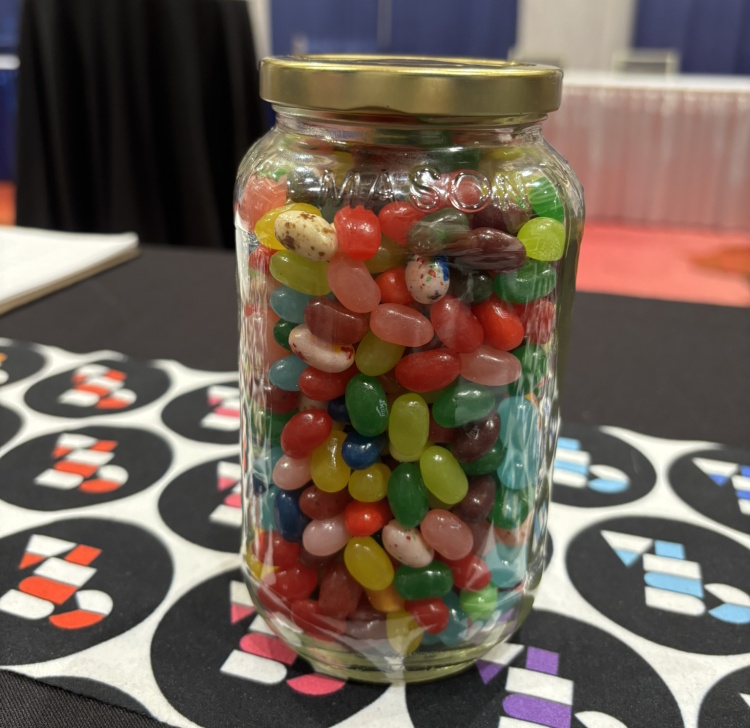
- Closing the loop on CSTA Washington membership is difficult. While “guess the number of jelly beans” enticed 33 people to give us their emails, only 17 wanted to join our friends mailing list. Although both Michelle Laskowski’s and my presentations were well received, it is unclear whether they drove any additional sign-ups for either friends or membership. After the conference ended, I contacted all of those who signed up as friends via e-mail and urged them to join as members for $10 discount rate, so far no one has.
- It’s great that attendees can earn clock hours by attending WA-ACTE. They also record all sessions, so attendees can view them online after the conference.
- A link to Michelle’s live presentation on YouTube: Finding Your Flock: Connecting Computer Science Educators Across Washington
- A link to my live presentation on YouTube: Using Data to Improve Your District’s CTE Course Catalog. However, I suggest looking at Washington CTE Growth and Demographics 2026 Beta, which hosts the Tableau visualization demoed in the presentation, the latest presentation slides, and a better-edited video demonstrating dashboard operation. There were technical difficulties – not due to me – that affected the live presentation video.
- Michelle and I were fortunate to have both Tammie Schrader and Jennifer Styer join us for a few days despite their incredibly busy summer schedules and the fires. Denise Thompson had planned to give a presentation, “Responsible AI in Action: Interdisciplinary AI Toolkit”, but had to cancel due to a variety of personal calamities and the fires. I hope that Denise can post the contents of this presentation to CSTAWA.org to enlighten all of us on this important subject.
- The College Board had a big presence at WA-ACTE (just as they did at the CSTA Conference) with their new AP Career Kickstart initiative that starts with AP Business Principles/Personal Finance and AP Cybersecurity this year.
- I was fascinated that the Federal Reserve (“The Fed”) has its own education outreach program. The Fed was also a bronze sponsor.
- I attended two sessions by Angela Allen of OSPI on the Learning Standards Review and Revision Project. Some key learnings: 1) Washington CS standards review and revision will start in the second half of 2026 and are scheduled to be adopted in the second half of 2026. This will occur in parallel with the EdTech standards review 2) Data Science has been integrated into the Math Standards 3) Media Literacy has been integrated into the ELA Standards 4) Elements of the infrastructure provided for the new CSTA PK-12 CS Standards (crosswalks, elementary grade breakouts) lend themselves well to easy integration into the new Washington learning standards infrastructure.
- I looked forward to a presentation on CTELink Framework Builder, an online system to help author CTE frameworks. A good online tool would eliminate the need for CSTA Washington to build a library of existing frameworks for schools to share. However, I was disappointed that it was still not a shipped product, had not yet figured out the sharing element, and was only part of a larger paid online system to help districts manage CTE curriculum. They did not provide information on how schools could even purchase or get a demo of the system.
- In my session, I was asked whether the CSTA Washington CTE dashboard had any employment data. I went to two sessions related to this question: “Why Your Program Needs Data, Not Just Instinct” by Holli Ryan-Kalaleh of OSPI and “Design Thinking for the Workforce Pipeline” by Raeshawna Ware and Ryan Beard of Washington STEM. Attending these and other conversations, I was struck by the difficulty of what is being asked of CTE programs in Washington: “How to prepare students for well-paying local entry-level jobs upon graduation from high school”