2026 PK-12 CS Standards: Foundation and Specialty Learning
This is the second in a series of posts about the 2026 PK-12 CS standards. For the full list of articles in this series, see the list at the bottom of this post.
The 2026 CSTA PK–12 Computer Science Standards do not simply revise a sequence of grade-level expectations. They introduce a structure that tries to answer two separate questions:
- What computer science should every student learn?
- What should students learn when they choose to pursue computer science more deeply?
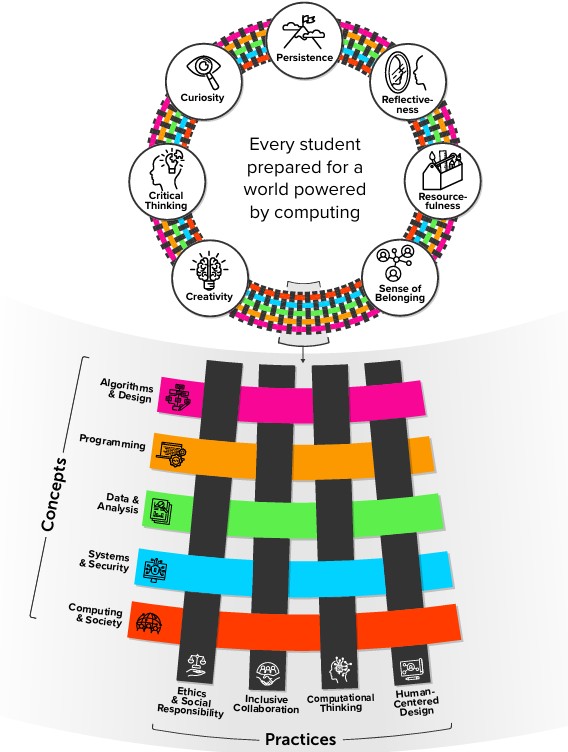
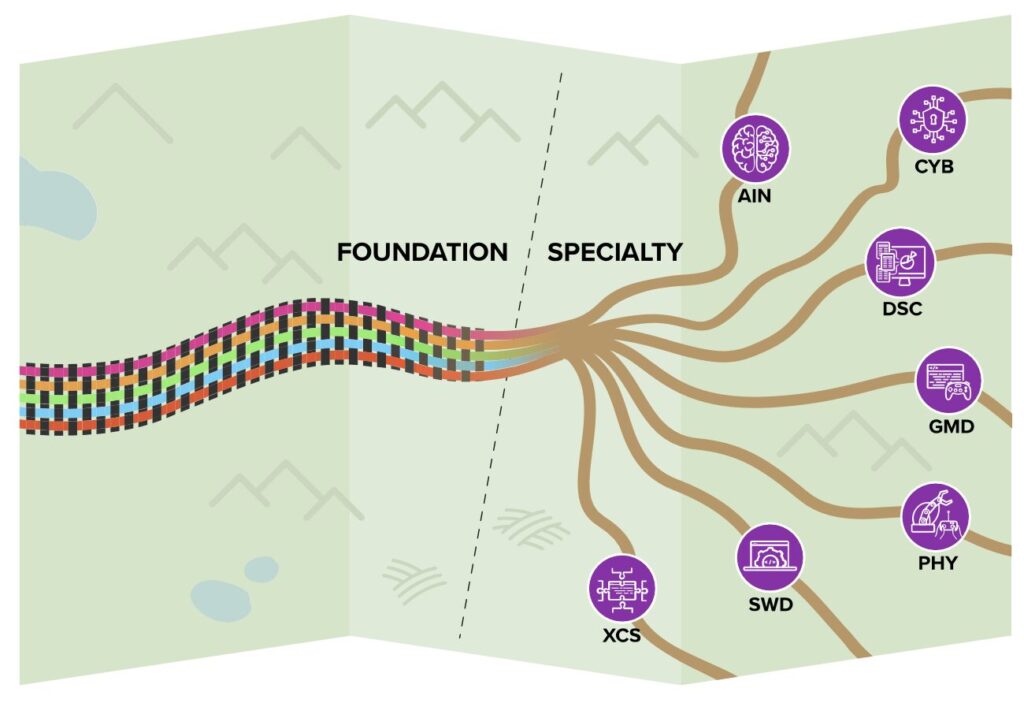
The foundational standards describe the computer science learning intended for all students from prekindergarten through high school. After completing that foundation, high school students can move into two levels of specialty standards in:
- Artificial intelligence
- Cybersecurity
- Data science
- Game development
- Physical computing
- Software development
Specialty Standards extend foundational PK–12 computer science learning by defining advanced, domain-specific learning in key areas of computing. These standards are organized into two levels (Specialty I and Specialty II) across six high school specialty areas identified through the Reimagining CS Pathways project.
There is also an X + CS option for integrating computer science with subjects such as biology, journalism, or the arts.
The combination foundational and specialty standards makes the CSTA computer science standards noticeably different from other recent K–12 standards. The Common Core establishes college- and career-readiness expectations and grade-level progressions, but it does not branch into optional disciplinary specialties. NGSS includes different high-school science disciplines, but those disciplines are part of the overall science architecture rather than elective tiers that extend a common computing foundation.
Explore the 2026 CSTA Standards
This article is part of CSTA Washington’s series examining the new CSTA PK-12 CS Standards and their impact on Washington state. Articles in this series: